
Simple Skincare Routine for Sensitive Skin Beginners
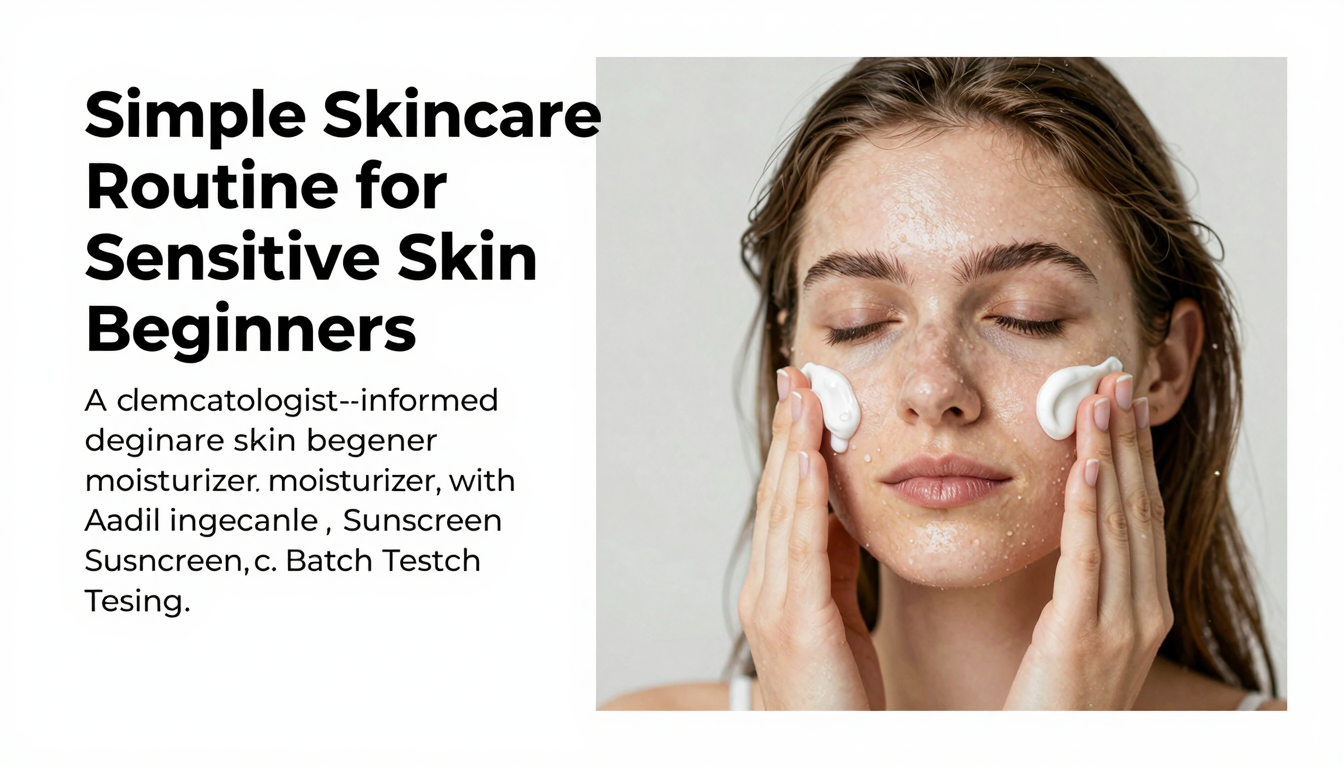
Starting skincare when your face reacts easily can feel like every product is a gamble. A simple skincare routine for sensitive skin beginners should reduce that uncertainty. You do not need ten steps, trendy actives, or multiple backups. You need a cleanser that does not leave your skin tight, a moisturizer that feels comfortable, and a sunscreen you can wear consistently.
Sensitive skin can show up as burning, stinging, itching, flushing, dryness, roughness, or frequent reactions after new products. Some people are oily and sensitive; others are dry, acne-prone, or managing a diagnosed condition. This guide focuses on non-prescription routine building. If your skin is painful, swollen, cracked, bleeding, infected-looking, or changing suddenly, pause experimentation and get individualized care from a board-certified dermatologist.
What Sensitive Skin Beginners Actually Need
The goal is not perfect skin. The goal is a predictable routine your face can tolerate. Sensitive skin usually does better with fewer variables: fewer products, fewer fragrance components, fewer exfoliating steps, and fewer new ingredients introduced at once.
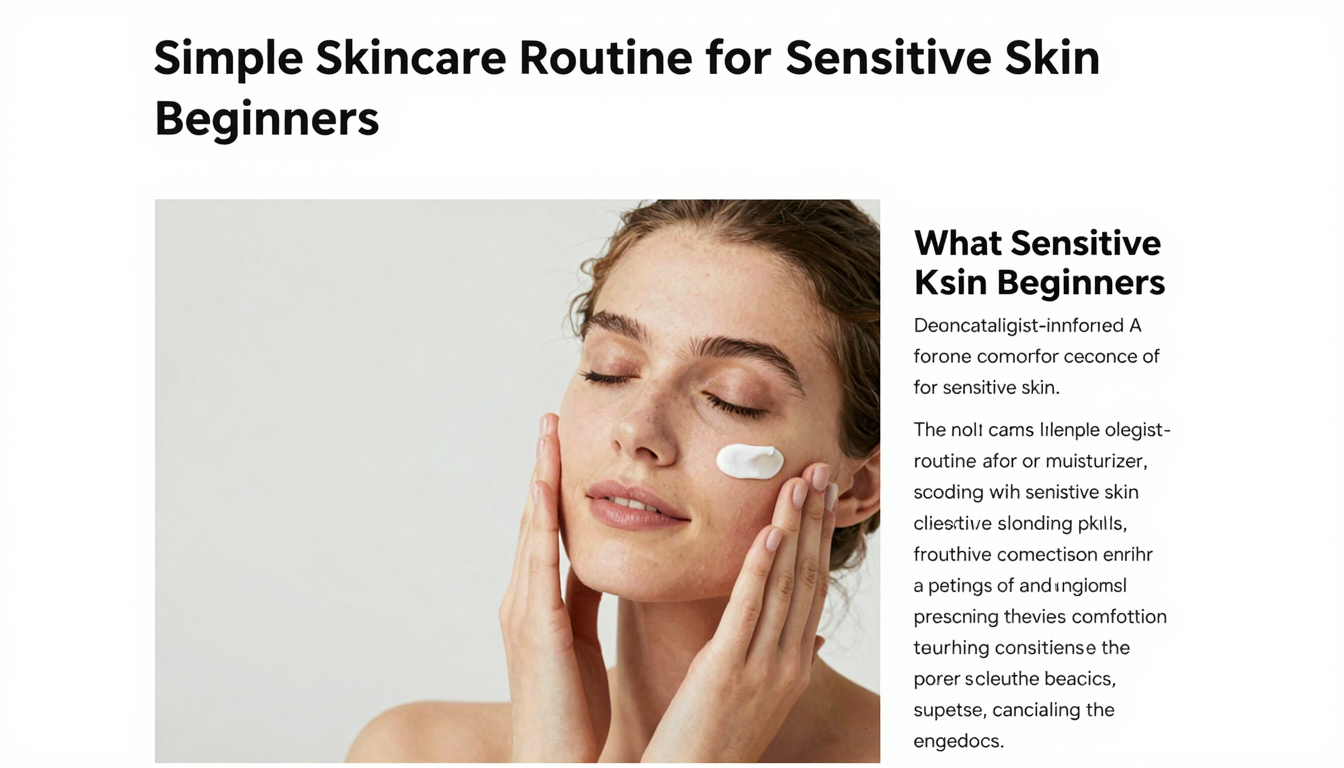
Think of the routine as three jobs: cleanse without stripping, moisturize to support comfort, and protect exposed skin from UV damage during the day. Practical skin care basics emphasize gentle cleansing, moisturizing, and sun protection as everyday habits, not aggressive routines or constant product switching.
Keep the first routine boring on purpose for two to four weeks. That gives your skin time to show whether the basics are compatible before you add anything stronger. For sensitive skin, the product you can use daily without drama is often more valuable than the product with the longest ingredient list.
Morning Routine: Cleanse, Moisturize, Protect
Your morning routine can be three steps. If your skin feels dry or comfortable when you wake up, a lukewarm water rinse may be enough. If you wake up oily, sweaty, or with residue from overnight products, use a gentle cleanser.
Choose a non-scrubby cleanser labeled fragrance-free, gentle, or for sensitive skin. Cream, lotion, milk, and low-foam gel textures are often more comfortable than high-foam formulas, though your own response matters most. Massage lightly with your fingertips for about 20 to 30 seconds, then rinse with lukewarm water. Hot water and rough washcloths can make dryness, flushing, and friction worse.
Apply moisturizer while skin is slightly damp. A useful moisturizer may include humectants such as glycerin or hyaluronic acid, emollients that soften roughness, and occlusives such as petrolatum or dimethicone that reduce water loss. Ingredient education for eczema-prone skin explains why moisturizers often combine water-binding, smoothing, and sealing ingredients, and that same framework can help sensitive skin beginners compare formulas.
Finish with sunscreen on exposed skin. Look for broad-spectrum SPF 30 or higher and apply the amount directed on the label. Sunscreen terms are regulated, so broad-spectrum labeling, SPF values, and water-resistance claims have specific meanings. Mineral sunscreens with zinc oxide or titanium dioxide may suit some sensitive skin users, but they are not automatically irritation-proof. Chemical, mineral, and hybrid sunscreens can all work if your skin tolerates them and you apply them properly.
Evening Routine: Cleanse and Rebuild
At night, keep it simple: cleanse, then moisturize. If you wear sunscreen, makeup, or water-resistant products, cleansing helps remove residue that may feel irritating or clogging.
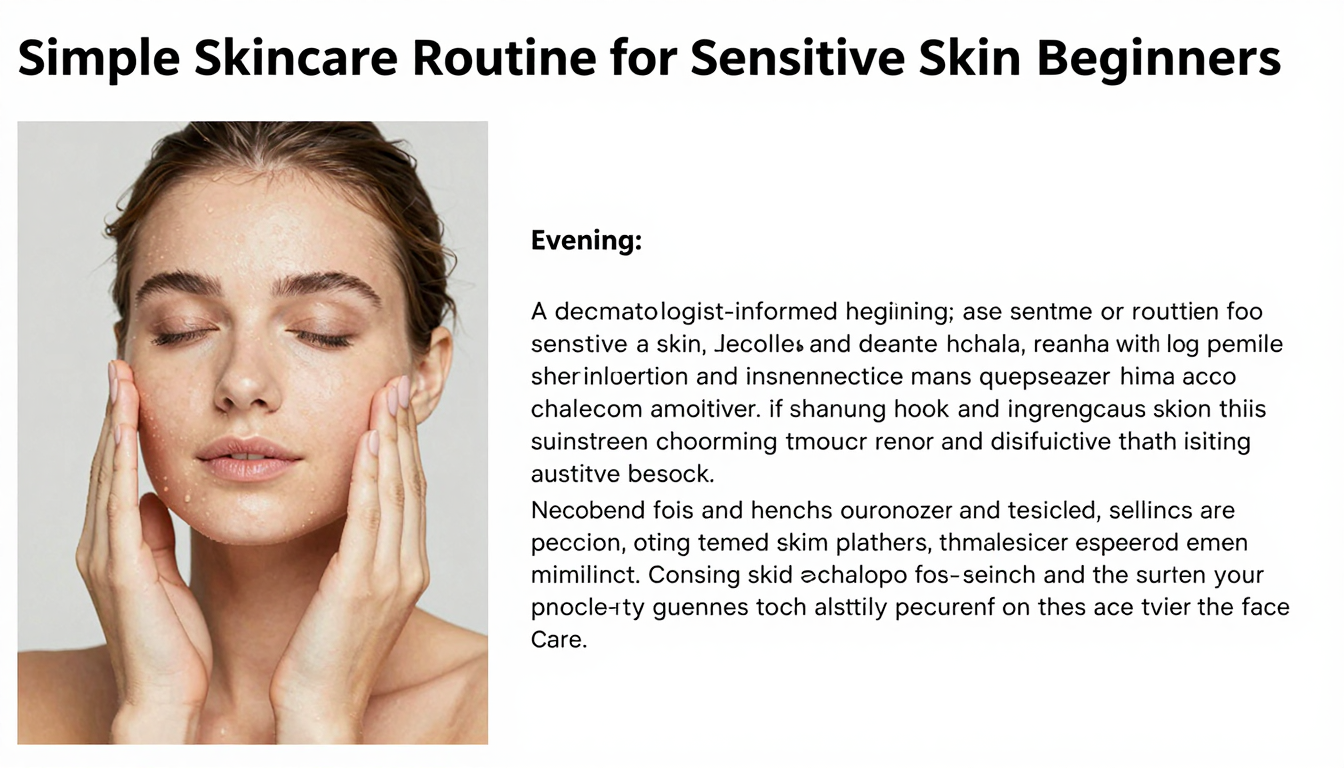
A single gentle cleanser may be enough. If sunscreen or makeup is hard to remove, try a fragrance-free cleansing balm, cleansing oil, or micellar water first, followed by your gentle cleanser. The key is not double cleansing for its own sake; it is whether your skin feels calm afterward. If your face feels tight, shiny, or burning, the routine may be too harsh.
After cleansing, apply enough moisturizer that your skin feels comfortable. Reactive cheeks, mouth corners, or eyelids may prefer a richer cream at night than in the morning. Petrolatum can help small dry patches because it seals well, but acne-prone users may want to patch test before applying it widely.
Avoid exfoliating acids, retinoids, vitamin C, clay masks, peels, and devices during the first two to four weeks. They may have a place later, but they make it harder to tell what is helping versus what is irritating.
How to Introduce New Products Without Overwhelming Your Skin
At-home patch testing cannot prove a product will never irritate you, but it can reduce the chance of putting a poor match all over your face. Test one new product at a time. Apply a small amount behind the ear, along the jaw, or on the inner forearm once daily for several days. Stop if you notice burning, swelling, rash-like bumps, or persistent itching.
When you move a product to your face, start with one area if you are highly reactive. For example, try a moisturizer on one cheek for a few nights before using it everywhere. That feels slow, but it is faster than recovering from a full-face reaction and guessing what caused it.
Keep a short note with the product name, start date, and reaction. Patterns matter. Your skin may dislike strong fragrance, high-foam cleansers, or using several niacinamide products at once. If scent seems to be a trigger, this Fragrance-Free Skincare Routine for Sensitive Skin: A Dermatologist-Informed Guide can help you reduce fragrance-related variables.
Ingredients to Prioritize, Use Carefully, or Skip at First
Prioritize barrier-supportive, low-drama ingredients: glycerin, petrolatum, dimethicone, ceramides, squalane, panthenol, colloidal oatmeal, and hyaluronic acid can be good places to start, depending on the formula. Ingredient lists do not tell the whole story. Concentration, pH, preservatives, packaging, and the full formula all affect tolerance.
Use active ingredients carefully. Niacinamide can help some people, but higher-strength formulas may sting or flush. Lactic, glycolic, mandelic, and salicylic acids can exfoliate, but beginners should avoid stacking them with scrubs or retinoids. Retinoids can improve the look of uneven texture and photoaging for some users, yet they can also cause dryness and irritation when introduced too quickly. Retinoid routine guidance is a useful reminder to start slowly and pair potentially drying treatments with moisturizer, even if your reason for using one is not acne.
Skip harsh scrubs, daily peel pads, high-alcohol toners that sting, essential oil-heavy products, and anything that burns beyond a brief mild tingle. “Natural” does not automatically mean gentle. Essential oils, citrus extracts, menthol, peppermint, eucalyptus, and lavender can irritate some people, especially when the skin barrier is stressed.
Be cautious with “hypoallergenic” claims too. They can be a shopping clue, but they do not guarantee compatibility. Cosmetic labeling rules allow products to describe intended use and ingredients, but cosmetic labels do not prove a product is irritation-proof, so your own tolerance still matters.
Common Beginner Mistakes That Make Sensitive Skin Feel Worse
The first mistake is changing everything at once. If you start a cleanser, toner, serum, moisturizer, sunscreen, exfoliant, and mask in the same week, you will not know what caused improvement or irritation. Build in layers: cleanser and moisturizer first, sunscreen next, optional products later.
The second mistake is cleansing too aggressively. Tight skin after washing is not a sign of being extra clean. It can mean your cleanser, water temperature, or technique is too harsh. Use fingertips, rinse with lukewarm water, and pat dry instead of rubbing.
The third mistake is treating every bump or red patch as a reason to exfoliate. Sensitive skin can become bumpy when irritated, dry, or over-cleansed. Exfoliating may feel smoothing for a day and leave you worse by the end of the week.
The fourth mistake is giving up on sunscreen because several formulas feel uncomfortable. Try different textures: fluid, lotion, cream, gel-cream, tinted mineral, or fragrance-free hybrid. Hats, shade, and UPF clothing can also reduce exposure when reapplication is difficult.
When to Ask a Dermatologist
A simple routine should make your skin steadier, not progressively worse. Consider seeing a dermatologist if you have intense burning, swelling, blistering, open cracks, symptoms around the eyes, sudden widespread rash, or reactions to many unrelated products. Also seek care if acne, rosacea, eczema, psoriasis, contact dermatitis, or infection may be involved.
If you are pregnant, trying to conceive, nursing, immunocompromised, or managing a medical condition, be careful with active ingredients and medication-adjacent products. Do not rely on social media lists of “safe” and “unsafe” ingredients. A clinician can help you weigh your situation, and product labels can change.
Simple Starter Shopping List
If you are building from zero, buy only three products at first: a gentle cleanser, a plain moisturizer, and a broad-spectrum sunscreen. Choose fragrance-free when possible, especially if fragrance may be a trigger.
For cleanser, look for a comfortable texture and a non-stripping finish. For moisturizer, choose a lotion if you are oily or combination, and a cream if you are dry, tight, or flaky. For sunscreen, pick the one you will actually wear in the directed amount.
A practical first month is simple: use cleanser and moisturizer at night for one week. Add moisturizer and sunscreen in the morning during week two. Continue through weeks three and four without exfoliants or treatment serums unless your skin is clearly calm. After that, introduce one optional product at a time for a specific goal, such as dryness, dullness, or uneven tone.
Sensitive skin routines work best when they are consistent, minimal, and adjustable. Your first routine does not need to be impressive. It needs to be tolerable, repeatable, and clear enough that your skin can tell you what it likes.