
Fragrance-Free Skincare Routine for Sensitive Skin: A Dermatologist-Informed Guide
A fragrance-free skincare routine for sensitive skin is less about owning fewer products and more about reducing avoidable irritation while supporting the skin barrier. Sensitive skin may sting, burn, flush, itch, or feel tight from products that other people tolerate easily. Fragrance is not the only trigger, but it is a common reason people simplify when their skin feels reactive.
The goal is not to fear every ingredient. The goal is to choose products with a clear purpose: cleanse without stripping, moisturize consistently, protect with sunscreen, and introduce treatment ingredients slowly. If you have persistent rash, swelling, severe burning, open skin, or symptoms that keep returning, a board-certified dermatologist can help determine whether irritation, allergic contact dermatitis, eczema, rosacea, acne, or another condition is involved.
What “Fragrance-Free” Actually Means
“Fragrance-free” means a product is formulated without added fragrance ingredients intended to create scent. This differs from “unscented,” which can sometimes mean a product contains masking fragrance to cover the smell of raw materials.
The US Food and Drug Administration explains that fragrance and flavor ingredients may be listed under terms such as “fragrance” or “flavor” on cosmetic labels, rather than naming every component individually, according to the FDA overview of fragrances in cosmetics. That matters because someone avoiding fragrance may not be able to identify every aromatic compound from the ingredient list alone.
Essential oils, botanical extracts, and “natural aroma” ingredients can also be sensitizing for some people. Natural does not automatically mean gentler, and synthetic does not automatically mean harsh. For reactive skin, judge a formula by how your skin tolerates it, not by whether the marketing sounds clean, clinical, natural, or luxury.
Why Sensitive Skin Often Does Better With Fewer Variables
Sensitive skin is not one single skin type. It can be oily, dry, combination, acne-prone, mature, melanin-rich, fair, or affected by seasonal weather. What many sensitive routines share is that the barrier may be easily disrupted or the nerves in the skin may react strongly to certain triggers.
The American Academy of Dermatology notes that sensitive skin may react with burning, stinging, itching, or tightness, and recommends gentle, fragrance-free products when skin is easily irritated, based on AAD guidance on sensitive skin. A shorter routine helps because it is easier to identify what is helping and what is causing problems.
Start with three categories: cleanser, moisturizer, and sunscreen. Once those are tolerated for a few weeks, you can decide whether to add a targeted product, such as azelaic acid, niacinamide, a retinoid, or an exfoliant. Even beneficial ingredients can irritate when layered too quickly or used too often.
Morning Routine: Cleanse, Moisturize, Protect
In the morning, many people with sensitive skin do not need a full foaming cleanse. If your skin is dry or tight when you wake up, rinsing with lukewarm water may be enough. If you are oily, sweat overnight, or use a heavy nighttime moisturizer, choose a mild fragrance-free cleanser that does not leave your face squeaky.
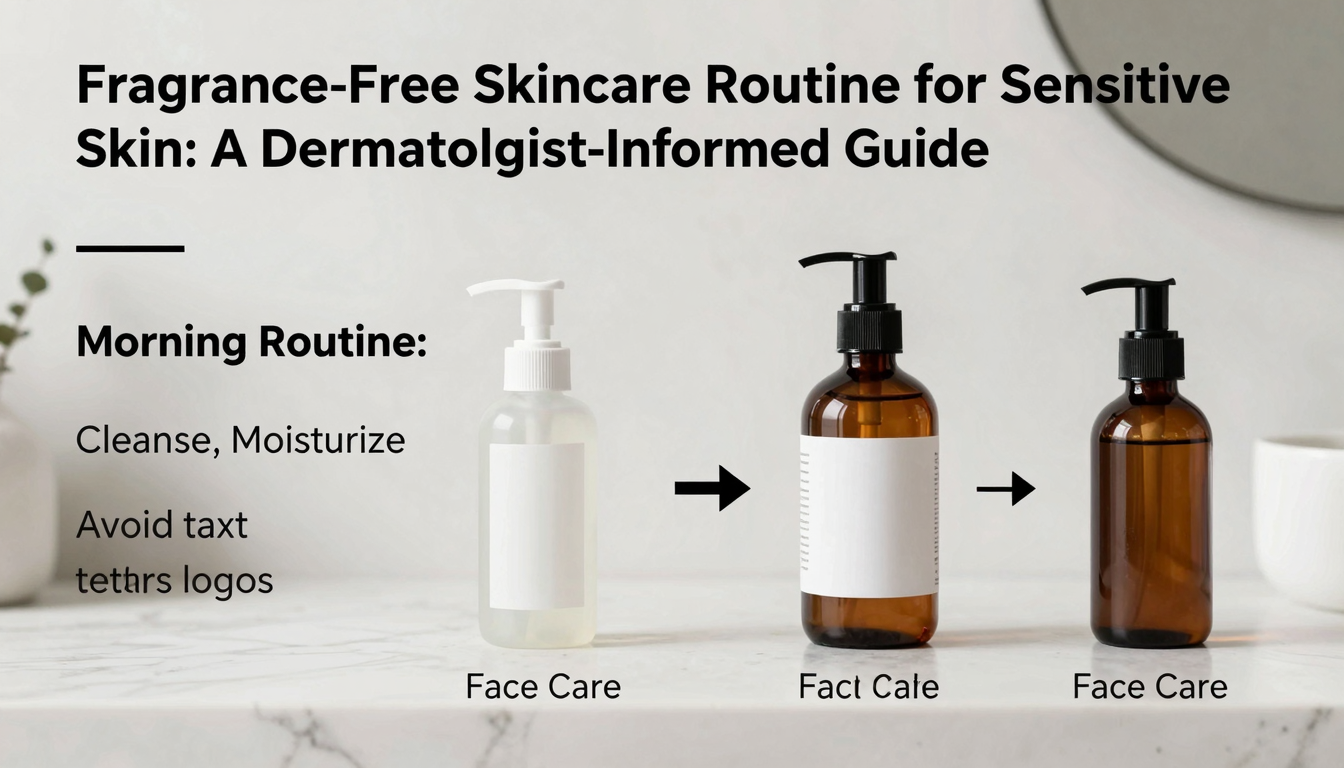
After cleansing, apply a fragrance-free moisturizer while skin is slightly damp. Helpful ingredients may include glycerin, petrolatum, dimethicone, ceramides, hyaluronic acid, squalane, shea butter, or colloidal oatmeal. The National Eczema Association describes moisturizers as an important part of managing dry, eczema-prone skin because they help hydrate and support the barrier, as outlined in its moisturizer guidance for eczema-prone skin. You do not need eczema to benefit from consistent moisturizing when your skin feels easily irritated.
Finish with sunscreen during the day. The FDA states that broad-spectrum sunscreens with SPF 15 or higher can help reduce the risk of skin cancer and early skin aging when used as directed with other sun protection measures, according to FDA sunscreen labeling guidance. For sensitive skin, mineral sunscreens with zinc oxide and/or titanium dioxide may be better tolerated by some people, though elegant chemical sunscreen formulas can also work. The best option is the one you can apply generously and reapply as directed.
Evening Routine: Remove the Day Without Overcorrecting
Your evening routine should remove sunscreen, makeup, sweat, and pollution without stripping the skin. If you wear water-resistant sunscreen or long-wear makeup, a two-step cleanse can help: first a fragrance-free cleansing balm, oil cleanser, or micellar water, then a gentle water-based cleanser.
If your skin feels tight after washing, reassess your cleanser, water temperature, and cleansing time. Hot water and long washing sessions can worsen dryness. Use lukewarm water, keep contact time reasonable, and pat dry instead of rubbing.
Moisturizer is the anchor step at night. If your skin is very dry, apply a cream moisturizer and seal dry patches with a thin layer of petrolatum or an ointment-style balm. This can be useful around the mouth, cheeks, or under the nose when the weather is cold or your barrier feels stressed.
The same fragrance-free principles apply below the neck. A resource like How to Choose Fragrance-Free Body Lotion for Sensitive Skin can help you evaluate body moisturizers without getting distracted by scent, texture claims, or trend-driven ingredients.
Ingredients to Look For
A sensitive-skin routine benefits from ingredients that hydrate, soften, and reduce water loss from the skin surface. You do not need every supportive ingredient in one product. A simple formula your skin tolerates is often better than a crowded formula with many extracts and actives.
Glycerin is a classic humectant that draws water into the outer layer of skin. Ceramides are lipids naturally found in the skin barrier and are often included in moisturizers designed for dryness or barrier support. Petrolatum is an occlusive ingredient that helps reduce transepidermal water loss; the AAD notes petroleum jelly can be useful for dry skin and minor skin care needs in appropriate situations, based on AAD advice on petroleum jelly.
Niacinamide can be well tolerated by many sensitive-skin users and may support the look of uneven tone and barrier function, but concentration matters. A high-strength serum is not automatically better. If your skin stings easily, a moisturizer with niacinamide may be easier to tolerate than a separate concentrated serum.
Colloidal oatmeal is often used in products for dry, itchy, or sensitive-feeling skin. It is regulated as an over-the-counter skin protectant ingredient in certain contexts, and the FDA includes colloidal oatmeal in its skin protectant monograph framework, reflected in federal OTC skin protectant regulations. Product claims still depend on the specific formula and labeling.
Ingredients and Habits to Approach Carefully
Fragrance is the obvious category to avoid, but it is not the only one that can bother sensitive skin. Be cautious with essential oils, menthol, eucalyptus, citrus oils, witch hazel, high-alcohol toners, abrasive scrubs, peel pads, and strong exfoliating acids. Some people tolerate these well, but they are common culprits when a routine suddenly starts burning.
Retinoids, vitamin C, benzoyl peroxide, salicylic acid, glycolic acid, and lactic acid can be useful in the right routine, but they are not mandatory for everyone. Introduce one active at a time and avoid starting multiple strong products in the same week. If you use prescription treatments, follow your clinician’s directions rather than adjusting frequency based on general skincare advice.
Application habits matter too. Applying actives to damp skin can increase penetration and irritation for some ingredients. Layering exfoliants under retinoids may be too aggressive. Using a cleansing brush, washcloth, or scrub every day can create mechanical irritation even if the products are fragrance-free.
How to Patch Test a New Product
Patch testing at home cannot diagnose an allergy the way medical patch testing can, but it can help you spot obvious irritation before putting a product all over your face. Choose a small area such as the side of the neck, behind the ear, or along the jaw. Apply a small amount once daily for several days, unless the product directions say otherwise. Watch for burning, itching, swelling, rash, or persistent redness. If a reaction appears, stop using the product and avoid testing multiple new products at once.
For suspected allergic contact dermatitis, formal patch testing through a dermatologist or allergy specialist may be more appropriate. The AAD describes patch testing as a tool dermatologists use to identify substances that may be causing allergic skin reactions, according to its patient guidance on contact dermatitis. If reactions are frequent or severe, professional evaluation can save months of guessing.
Sample Fragrance-Free Routine by Skin Feel
If your sensitive skin is dry or tight, use a creamy cleanser at night, rinse lightly or skip cleanser in the morning, and choose a richer moisturizer with ceramides, petrolatum, dimethicone, or shea butter. At night, add an ointment layer only where needed.
If your sensitive skin is oily or acne-prone, avoid the instinct to over-cleanse. Use a gentle gel or light foaming cleanser, then a lightweight fragrance-free moisturizer. Gel-cream textures with glycerin, dimethicone, or low-level niacinamide can feel more comfortable than heavy creams. If you use acne-targeted ingredients, introduce them slowly; acne often needs a consistent, individualized plan.
If your sensitive skin is combination, treat different zones differently. A richer cream may belong on the cheeks, while a lighter lotion may work better on the T-zone. You do not have to force one texture to work everywhere.
When to See a Dermatologist
A fragrance-free routine can reduce avoidable triggers, but it is not a substitute for medical care. See a dermatologist or qualified healthcare professional if you have painful rashes, swelling, oozing, bleeding, sudden sensitivity, reactions around the eyes, or symptoms that do not improve after simplifying your routine.
You should also seek guidance if you are pregnant, breastfeeding, managing a diagnosed skin condition, or using prescription treatments. Ingredient safety and treatment choices can depend on your health history, medications, and the exact product or drug being used.
The most reliable fragrance-free skincare routine for sensitive skin is boring in the best way: consistent, readable, and easy to troubleshoot. Start with a gentle cleanser, a moisturizer your skin actually likes, and sunscreen you will wear. Then add only what your skin needs, one step at a time.